Sunday, March 19, 2006

Ed's Excellent Adventure

The Arrival

Ed arrived a little ahead of schedule at Portland International Airport.

He arrived on a Alaska Air Flight. I love the symbol on the tail.


The Adventure

After a few days of orientation Sharyn decided on a trip to McMinnville and the Evergreen Air Museum - home of the Hercules designed and flown by Howard Hughes and better known as the "Spruce Goose."

There are lots of interesting things at the museum and the day we went some automobile enthusiasts had come as a group driving some great old cars.

This is a Douglas C-47 "Skytrain" - Our "boys" loved the pinup images on these planes. They were brave soldiers that were transported and dropped from this airplane and others like it at Normandy.
SPECIFICATIONS
Span: 95 ft. 0 in.
Length: 64 ft. 5 in.
Height: 16 ft. 11 in.
Weight: 33,000 lbs. loaded
Armament: None
Engines: Two Pratt & Whitney R-1830s of 1,200 hp. ea.
Crew: Six

I think about the history and that I was only 1 year old when these young men risked and in some cases gave their lives so we could live in peace.

With the grey "Hercules" in the background this Curtis small craft stands out with it's bright yellow and orange paint job.

Of course the main attraction is the huge HK-1 Hercules (Spruce Goose)
Specifications

Aircraft Type:

Cargo Prototype

First Flight:

November 1947

Wingspan:

319 feet 11 inches

Length:

218 feet 8 inches

Height:

79 feet 4 inches

Weight:

300,000 pounds

Capacity:

18 Crew, 750 troops

Status:

Display

The Hughes Flying Boat represents one of man’s greatest attempts to conquer the skies as the largest airplane ever constructed. It flew only one time on November 2, 1947. Conceived as a personnel and materiel carrier, the single hull prototype was designed to fly Trans-Atlantic to avoid World War II German submarines that were sinking Allied ships in large numbers. Completed in 1947 after the end of the War, the wooden winged giant is nearly six times bigger than any aircraft of its time. The press insisted on calling the Hughes Flying Boat the “Spruce Goose,” a name that its billionaire builder Howard Hughes despised. Most of the huge plane is actually made of birch, with only small amounts of maple, poplar, balsa, and, yes, spruce. Birch was chosen because testing proved it light, strong, and resistant to splitting, dry rot and deterioration.


The interior is fascinating looking from near the front to the rear of the plane.

I don't know the names of all the planes in the museum and this picture was taken by Ed using my other digital camera This bi-plane is a georgeous example of restoration.

Ed especially like this Gee Bee R1 sportster.

"The R-1 and R-2 were very soundly constructed aircraft. The structures were stress analyzed by Pete Miller, he stressed the entire aircraft for 12 Gs positive. After extensive research and testing the R-1 and R-2 were built. Only the best materials were used and workmanship was incredible. The wings were covered with mahogany plywood and then covered again in with "balloon-fabric" for more strength. The fuel caps were now enclosed inside the fuselage and the windscreen was constructed of 3-layered shatterproof glass.

Perhaps the most unusual feature was the pilot position just ahead of the vertical fin. With a fuselage of just 17 ft. 9in. in length an extreme aft location for the cockpit was necessary to balance the engine and Smith adjustable propeller up front. The R-1 and R-2 were considerably larger than the previous model Z: wing span, 25ft.length, 17ft.9in.wing area, 100 sq.ft. empty weight, 1,840 LB; with 160 gal of fuel and 18 gal for oil."


Sharyn and Ed were the sign readers learning so much about the planes I couldn't keep up.
But Howard Hughes didn't just conceive of the Hercules he also designed the dinghy shown here.

To giv an idea of size this is a TitanII missile laying next to the Hercules.

...And a SR-71 "Blackbird" beneath the wing.

Another nice pinup under some wicked looking armament.

Tail gunner pod... a dangerous place to fly when in war.
The beautiful and dangerous Carolyn.


This is not really the "Ruthless II" Corsair flown by Oscar Chenoweth but a gullwing Corsair once flown by the El Salvador air force. That plane is shown with the onboard markings of pilot Oscar Chenoweth of Salem, and it’s called “Ruthless II” Chenoweth’s wife, Ruth, divorced him while he was overseas. (Info from the Portland Tribune)

Both of these Spitfires are pretty cool.

One of the fabled "Flying Tigers" Note taken from the USAF online museum

"In Burma, Claire L. Chennault, a retired Air Corps major who had served as special advisor to the Chinese Air Force since 1937, formed the American Volunteer Group (A.V.G) nicknamed the Flying Tigers. The unit consisted of approximately 100 pilots and 200 groundcrew personnel (most of whom had been released from the U.S. Army, Navy, and Marines to volunteer for the A.V.G.) and was equipped with obsolescent P-40b airplanes."


The P-38 Lightning - Ed took a picture of this wonderful plane.
The Lightning designed by Lockheed engineer Clarence "Kelly" Johnson and his team of designers, represented one of the most radical departures from tradition in American fighter development. The Lightning was a complete break-away from conventional airframe design, power, and at long last, armament. Not only did it have twice the power and almost twice the size of its predecessors, but with no less than four .50 cal. machine guns plus a 20 mm cannon, the P-38 had enough firepower to sink a ship--and sometimes did. Concentrated in the central fuselage pod, the guns fired parallel which eliminated a need for a propeller synchronizer.

The Lightning tricycle landing gear and twin-boom configuration completed the list of major deviations from what might he considered conventional Army fighters. In this respect, it was very unusual that the Lightning design progressed beyond the testing stage; such radical concepts seldom achieved production status. But the simple fact was that the P-38 design worked and the Army seemed to have found its dream plane in this 400 mph fighter."

(information from avaition-history.com)
Finally Ed tried to start this biplane and fly back to our home in Eugene.


No Scrabble

Quote of the Day ~

"I have a feeling that there is just about one more good flight left in my system and I hope this trip is it. Anyway when I have finished this job, I mean to give up long-distance "stunt" flying."

~ Amelia Earhart (1897-1937) lost while flying at 40 years old

Wednesday, March 08, 2006

Happy Birthday Steven

March 9, 1970


What a special gift you are Steven. Your mom and I have a birthday wish for you from the words to a Bob Dylan song. It's our wishes and how we will always see you

Forever Young
by
Bob Dylan

May God bless and keep you always,
May your wishes all come true,
May you always do for others
And let others do for you.
May you build a ladder to the stars
And climb on every rung,
May you stay forever young,
Forever young, forever young,
May you stay forever young.

May you grow up to be righteous,
May you grow up to be true,
May you always know the truth
And see the lights surrounding you.
May you always be courageous,
Stand upright and be strong,
May you stay forever young,
Forever young, forever young,
May you stay forever young.

May your hands always be busy,
May your feet always be swift,
May you have a strong foundation
When the winds of changes shift.
May your heart always be joyful,
May your song always be sung,
May you stay forever young,
Forever young, forever young,
May you stay forever young.

God bless you son and your beautiful family,
Love Mom and Dad

Quote of the Day
"Some choices will choose you. How you face these choices, these turns in the road, with what kind of attitude, more than the choices themselves, is what will define the context of your life." Dana Reeve (17 March 1961 – 6 March 2006) American actress, singer, and social activist; wife of Christopher Reeve.

Friday, March 03, 2006


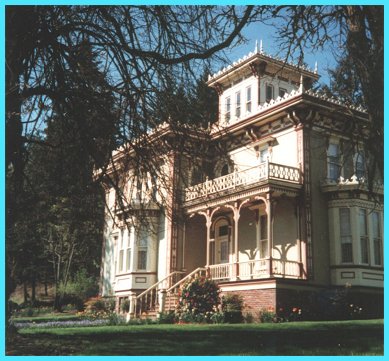
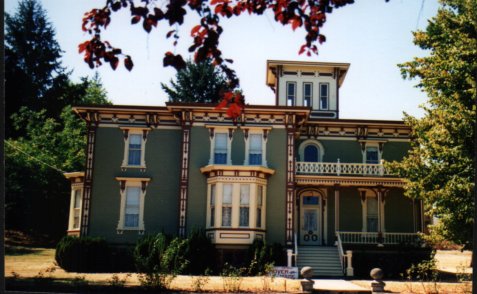
Moyer House History

The elegant old Moyer House has spent more than 100 years overseeing the life and development of one of Oregon’s oldest pioneer communities.
John M. Moyer, born in 1829, came west with his friend, George F. Colbert, in 1852. The two young men, both carpenters by trade, began building houses in the area around Brownsville, and Moyer soon had a job building a house on Blakely Avenue for Hugh L. Brown, after whom Brownsville was later named. In 1857 John Moyer married Mr. Brown’s daughter, Elizabeth, and in time the two bought a farm and some lots in Brownsville. Later, Moyer owned, or had interests in, a sash and door factory, the Brownsville Woolen Mills and the Bank of Brownsville. He was also the town’s first mayor, and served on the school committee.

Because of their business and civic involvements, the Moyers entertained frequently, so eventually felt the need for a new house. The property they selected covered seven acres, extending toward the Calapooia River and Brownsville’s present City Park.

Using plans he had drawn himself, lumber milled in his sash and door factory, and with the help of his longtime friend, George Colbert, J.M. Moyer built his elaborate new house in 1881, with extreme attention to detail.
The Italianate style house replaced the Moyers’ smaller home nearby. Moyer did much of the work himself, and is said to have handpicked all the lumber for its construction. The house also boasted wooden Venetian blinds, with the slats produced in Moyer’s sawmill.

Twelve-foot ceilings, a while Italian marble fireplace and carved walnut banisters decorated the inside, while elaborate trims and heavily bracketed cornices adorned the Italianate exterior. Landscapes and scenes in oil were painted on walls and window transoms. On the ceilings of several rooms were floral designs, said to have been painted by an itinerant Italian artist, while great medallions made of wood were constructed to hold the light fixtures.


An Account of the building of the Moyers House


John and Elizabeth Moyer lived together in the house until his death in 1900.
"Mr. Moyer is completing one of the most artistically arranged residences in the state," exclaimed an 1882 Albany newspaper. John and Elizabeth Moyer started planning their Brownsville mansion as early as 1878, but construction did not begin until t he spring of 1881. Although the house was inspired by contemporary Italianate Villa style architecture, it was original in its conception and is still considered one of the finest of its type in Linn and Benton counties.

The Italianate house replaced the Moyer’s smaller dwelling located on the same site. Three original outbuildings, later demolished, remained south of the new house; at the rear, a more recent carriage house built in the late 1920s still stands. Eight acres surrounded the house, including an orchard and Moyer’s sash and door factory. "Moyer Hill," south of the house, was often used for recreation, and provided an elevated stage from which the Brownsville Brass Band performed. A 100,000 gallon reservoir on the hill supplied the house, planing mill, and eventually the whole town with water.

Much of the two-story frame structure’s lumber and wood detailing was thought to have come from Moyer’s planing mill. No expense was spared in the exterior details such as the delicate jigsaw corner boards, decorative frieze boards, and massive eave brackets. Smooth-matched wood siding, used to simulate stone, covered the front and sides of the house while less expensive shiplap siding covered the back. A cupola perched on top of the building provided a glass observatory. Wooden cresting with corner finials finished off the roof’s edge. The house is painted in the original warm earth tones which accentuate the bay windows and ornate wood trim.


Perhaps the most unique features of the house’s interior are the hand-painted landscapes, floral designs and stenciling. Some of the paintings on panels above the bay windows and transoms may depict wildlife and landscapes the Moyers experienced in their travels. Many of the ten foot ceilings are decorated with delicate floral designs and stenciled patterns, and ornate plaster

medallions hold light fixtures. A house outside Peoria, Oregon, several miles west of Brownsville, had similar paintings that were reported to have cost $1200 in 1874; this type of interior detailing was a costly venture. The ornate fireplace in the living room was originally "faux" painted to resemble marble. Fine woodworking which can be seen throughout the house includes diagonal wainscoting and a finely curved walnut banister and newel post. The stairway leads to two bedrooms, a sitting room, and an attic space. An arched doorway once decorated by stained glass opens to the second story balcony. Evidence of a narrow stairway which led to the cupola can still be seen on the upstairs hall ceiling and wall boards. The cupola was a favorite place to relax on warm summer nights when the windows were opened and the town could be viewed from overstuffed horsehair furniture.

After Elizabeth Moyer died in 1921 the house was sold to the local bank president, Harry Thompson. During and after the Thompson’s residency alterations occurred in the house. The kitchen and dining room were enlarged, doorways were widened, a new doorway connected the music room to the dining room and the back roof was raised to accommodate a bathroom and boarder/maid room. In the following years many people owned or rented the house and much of the original detailing was covered or destroyed. It wasn’t until 1963 when the Linn County Historical Society bought the house that some of the original details were uncovered.

With a grant from the Hill Foundation and private donations the house was acquired, starting the time-consuming process of restoration. Many old families donated and loaned furnishings which decorate the house. The Seth Thomas clock, the hat and umbrella stand, and the south parlor bedroom set are the only furniture displayed which belonged to the Moyers.

The house now belongs to Linn County and is designated as a museum, under the care of the Parks Department and a devoted group of volunteers, the Linn County Museum Friends. Other important support comes from donations and fund raising events.

The Moyer House is listed on the National Register of Historic Places and is a lasting reminder of an early period of prosperity in Linn County.

The Moyers


John M. and Elizabeth Brown Moyer were early settlers in Linn County. Both the Moyer and the Brown families contributed significantly to the development of Brownsville. The Browns migrated to Oregon from Tennessee in 1846, and were one of the earliest pioneering families in Linn County. The City of Brownsville was named for Hugh L. Brown, father of Elizabeth Moyer.

John M. Moyer came west from Ohio in a rapid three month journey, reaching the Oregon territory in August of 1852. Moyer quickly found his carpentry skills in demand in the growing Calapooia valley community. He met Elizabeth Brown while helping her father build his house. Elizabeth and John were married in 1857 and set up housekeeping in a sparsely furnished box house on 160 acres near town, and started farming.

After the town of Brownsville began to prosper, the Moyer family moved into town and John Moyer resumed his trade as a carpenter. In April of 1863 he purchased a sash and door factory, improving it with new machinery and developing it into a profitable business. He ran the mill until 1875 when poor health forced him to rent out the business. Moyer was also an early organizer of the Linn Woolen Mills, later called the Eagle Woolen Mills.

The Eagle Mill was struck by financial problems, and was again reorganized in October, 1875, as the Brownsville Woolen Mill. Under Moyer’s management as president, the mill became a very successful enterprise. An 1881 Albany newspaper reported that the "Brownsville Woolen Mills sold last year $110,000.00 worth of goods. The Company employs about 35 hands, who receive an average of $2.00 per day." The article appeared the same year that John and Elizabeth built their elegant new house; the mill probably provided the financial backing for their grand effort. John Moyer remained active in business and civic affairs until cancer took his life in July, 1904, at the age of 75.

Brownsville
The site chosen in 1846 for the town of Brownsville was ideal, located in the fertile farmlands of the Calapooia Valley. The Cascade Range to the east contained rich timber resources needed for building and the Calapooia River, which bisected the town, provided a water power source necessary for industry. Originally Brownsville was called Kirk’s Ferry or Calapooia, but in May, 1856, the town officially changed its name in honor of Hugh L. Brown, who was credited with establishing the town’s first general merchandise store.

Although the rich agricultural land and timber production played an important role in Brownsville’s development, it was the established woolen mill industry which put Brownsville on the map. The woolen mill ran from 1862 until 1955 when a disastrous fire put the mill out of business. The plant was known for the excellent quality of its woolen products and won first prize for blankets at the New Orleans World’s Fair.
A narrow gauge railroad reached Brownsville in 1881, further stimulating the growth of the small valley community. The first brick building was constructed in 1903 from local clay and can still be seen at the north end of Main Street. By 1904 Brownsville boasted of "an opera house, seating 500; an electric light plant; a live newspaper; Wells Fargo and Co.’s Express; W.U. Telegraph; also telephone service and mail daily." The town also prided itself on have no saloons and a population of 1200.

Brownsville’s population has fluctuated little over the past 100 years and much of its historic character can still be seen. For over 35 years, the city of Brownsville has promoted a community-wide effort to preserve structures that played an important role in the town’s early development.

Restoration and rehabilitation have brought many of these historic buildings back to life, enhancing the unique sense of place and price which surrounds one of Linn County’s oldest settlements.

Quote of the Day
"If only we'd stop trying to be happy we could have a pretty good time." ~ Edith Wharton She traveled extensively by motorcar, helped untiringly with refugees in Paris during the first World War, and actually only returned once again in her lifetime to the United States to accept the Pulitzer prize for her novel, The Age of Innocence.

Wednesday, March 01, 2006

Sears Road Reprised

Be sure to click on the pictures for a larger view and use the back button of your browser to return to this page.

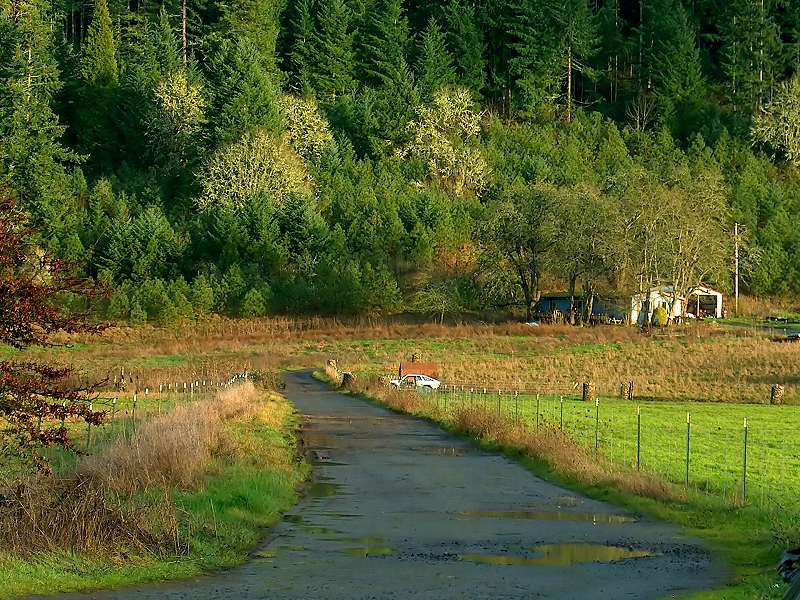
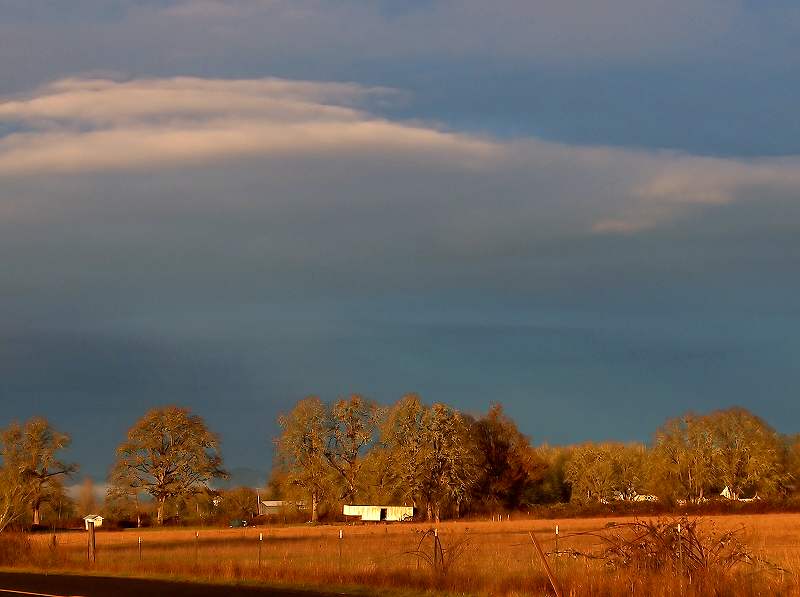
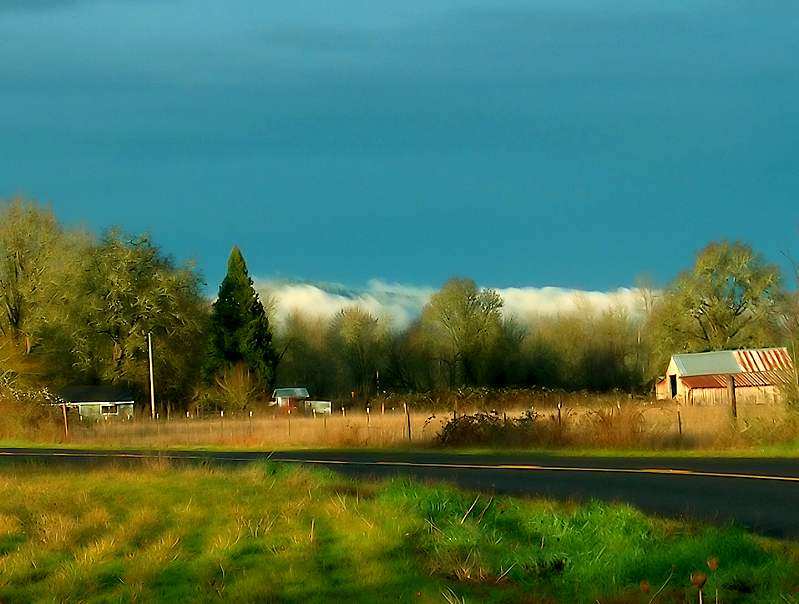
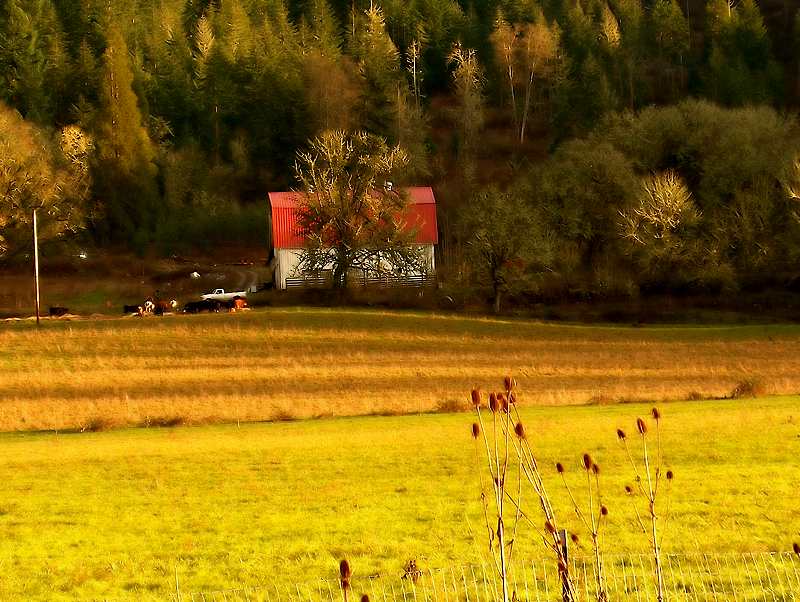
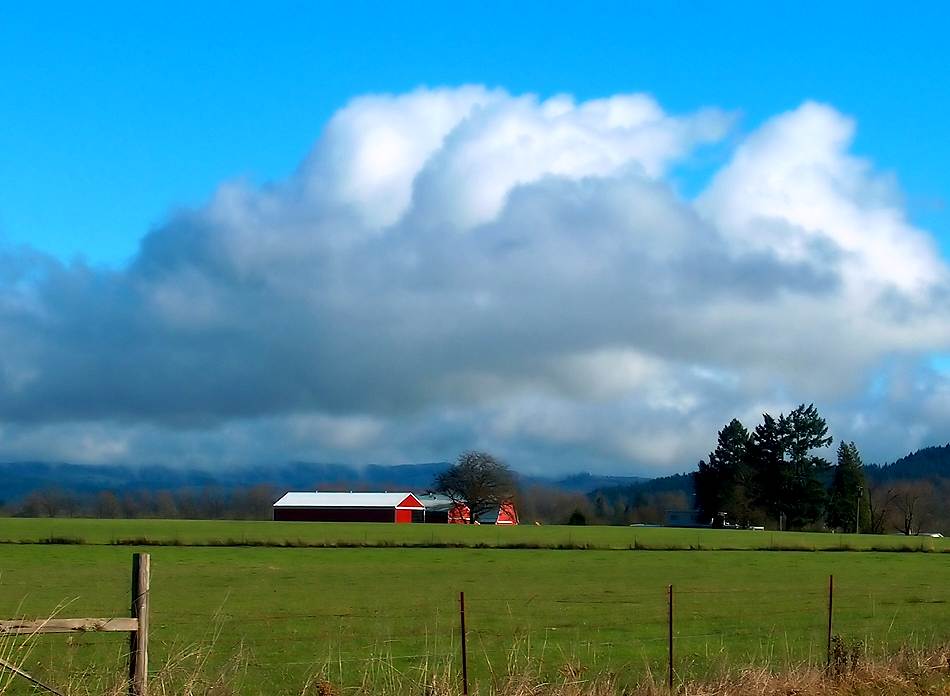
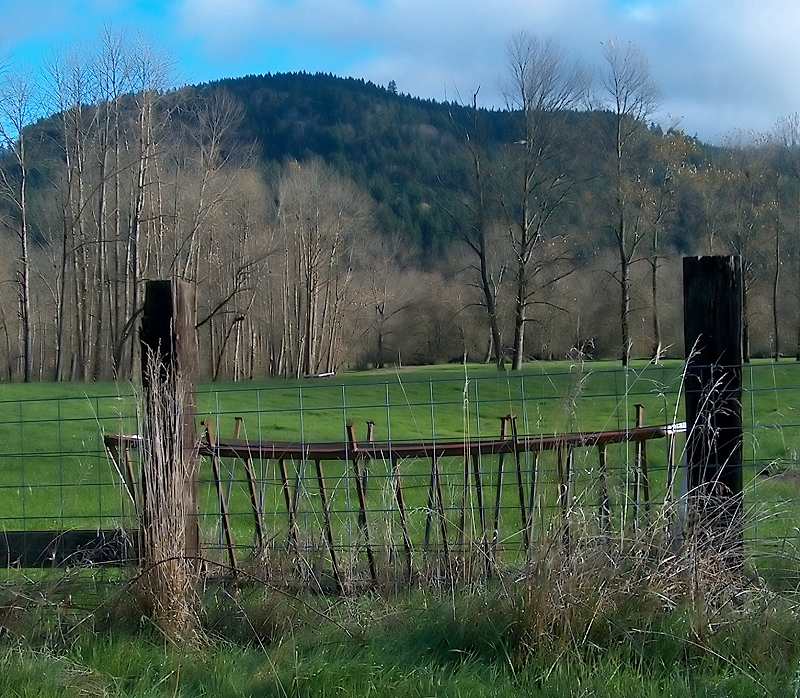
It's just 1/2 mile away, as the crow flies, and it's a pretty normal rural area. Not much you can call traveling and I took the mini-musemobile. About a year ago I took some pictures on Sears road. Sears road is the scenic route (my opinion) from Creswell to Cottage Grove. It's mostly rural scenery a person hardly notices.


Big trees, old farm houses and the panorama is incredible.


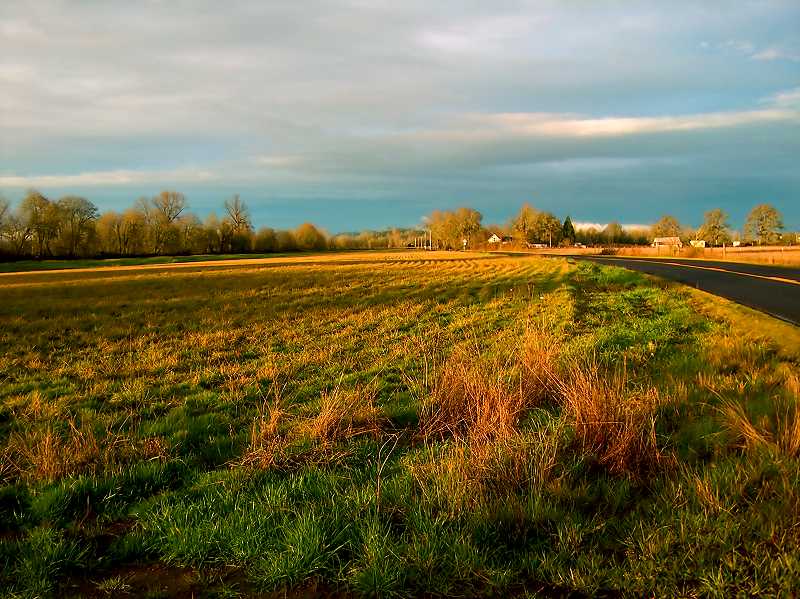
It's really striking how stopping to see the fields makes a difference between the ordinary and the beautiful.


Then again Sears road has something most other rural roads, in the US at least, do not have, a castle.


I noticed most the expansive sky.


I noticed how quickly it changed


I noticed the color variations and combinations.


Most of all I noticed what a difference it makes to really, really look at the place we live and the wonder of my rediscovered familiar surroundings


No Scrabble

Quote of the Day ~ I watched a movie last night called {proof} about a mathematician and his daughter. The movie centered around a world where the mathematical {proof} was earth shattering but a truly esoteric exercise. Today Google's quote of the day was the one below.
"Today's scientists have substituted mathematics for experiments, and they wander off through equation after equation, and eventually build a structure which has no relation to reality."

~and this one I also found which was the crux of the movie~

"The scientists of today think deeply instead of clearly. One must be sane to think clearly, but one can think deeply and be quite insane."
Nikola Tesla, July, 1934 US (Serbian-born) electrical inventor (1857 - 1943) He Died the year I was born

Thursday, February 23, 2006

Oregon Again

As much as we enjoy traveling we love our home and our state. Oregon is an emerald stone in the landscape of America. Green hills, green of the University of Oregon Ducks, blue green ocean waters and the wonderful agriculture that makes my state a down to earth place to live. The top agricultural products of Oregon are:

Greenhouse/nursery,


Cattle and Calves Dairy products,


Hay, Ryegrass


Well we do have some clouds also especially in the winter months. But it's been very nice since we got back except for some unusually cold nights.


So we will buy some new spring plants,


Photograph the rural beauty,


and follow the road less traveled we will always remember the joy of travel and the comforts of home.


Scrabble Scores - Scrabble King 453 - the new contender ex-champ 323 and tonight
Scrabble King 312 - the new contender ex-champ 294

Quote of the Day " All changes, even the most longed for, have their melancholy; for what we leave behind us is a part of ourselves; we must die to one life before we can enter another. ~Anatole France - pseudonym for Jacques Anatole Thibault (1844-1924), was the son of a Paris book dealer.

Copyright

©Paul Viel